
Essex County City Directory Holdings
Start with the Salem Public Library directory collection, the fullest online entry point for Salem. These are dated editions, not one continuous run. No single file covers everything. The library splits each edition into smaller parts, so expect to open several sections during one search. Inside a book, the printed layers do different jobs: name listings answer who, Street & Householders' material answers where, and business pages and City Information round out the picture. Some editions also cover nearby Essex County towns. Whatever a given year actually prints still controls.
| Directory source | Years represented | Keeper or holding | How to reach it |
|---|---|---|---|
| Salem digitized directory editions | Selected editions from 1866 through 1946 | Salem Public Library | Free online files, divided into sections |
| Street & Householders' material | 1881 sample; 1931 guide noted | Salem Public Library | Online PDF and directory sections |
| Essex city-directory holdings guide | Salem 1929-32; selected Methuen, Newburyport, and North Andover years | National Archives guide | Holding reference, not proof of online access |
| House-history binders and database | Material varies by property | Historic Salem, Inc. | Online browse plus local research holdings |
Salem's set is not a countywide tool. For another Essex County town, begin with its own library, clerk, historical society, or archive. The National Archives guide identifies selected Essex holdings, including runs for Salem, Methuen, Newburyport, and North Andover. A holding list reports locations, not open scans. Confirm online availability before planning around any single edition.
Salem City Directory Years and Gaps
Salem's digitized directories span 1866 through 1946. The surviving editions run 1866, 1869, 1872, 1874, 1876, 1878, 1881, 1882-83, 1884, 1886, 1890-91, 1893-94, 1895-96, 1897-98, 1899-1900, 1901-02, 1906, 1910, 1911, 1914, 1915, 1917, 1921, 1931, 1933-34, 1935, 1936, and 1937. A final edition appeared in 1946. Each volume is a snapshot, not a continuous record. A name absent from one edition may reflect a move. A spelling change could be the cause. So could an omission by the printer. Publication gaps account for plenty of absences too. The library flags one known defect. Beverly pages 497 through 546 are missing from the 1899-1900 run. Keep that gap in any citation.
Publishers go unnamed for some editions on the collection page. Read the title page before crediting a publisher. That check saves a citation from guesswork. Open the digitized collection before assuming a year covers every town. Beverly, Danvers, Marblehead, Peabody, Essex, Manchester, Hamilton, Wenham, Middleton, and Topsfield appear in different editions. Ipswich and other nearby places appear too. Record the printed title, year, section, and scan page whenever you note a result.
Note: A missing entry or page is an unresolved lead. It is not proof that a household left Essex County.
Essex County City Directory Access Paths
Digitized files are not the only route. The Salem Public Library Reference Department and Salem Room at 370 Essex Street keeps directories, local-history works, newspapers, and microfilm. Visitors can use computers, microfilm readers and printers, scanners, a copier, and a fax. When a PDF falls short, reference staff can help. Staff can steer a question toward the Salem Room, an obituary source, or another local collection.
Records the city itself created belong with the Salem City Archives. It sits under the City Clerk and holds records dating to 1634. It offers reproduced historic town records and a copy procedure. The library's digitized books page also routes researchers to Vital Records to 1850, Salem directories, and Essex Institute material. For an address outside Salem, ask that municipality about its own local records.
The Salem Historical Society resources page points to Historic Salem's house-history material, the Phillips Library, Salem State collections, and city records. House-history work can set a directory citation beside deeds, atlases, plans, and Sanborn references. That is supporting context, not a substitute for the printed directory page.
The Salem Public Library local-history department page is the starting point for in-person collections. It also covers the digitized materials described above.
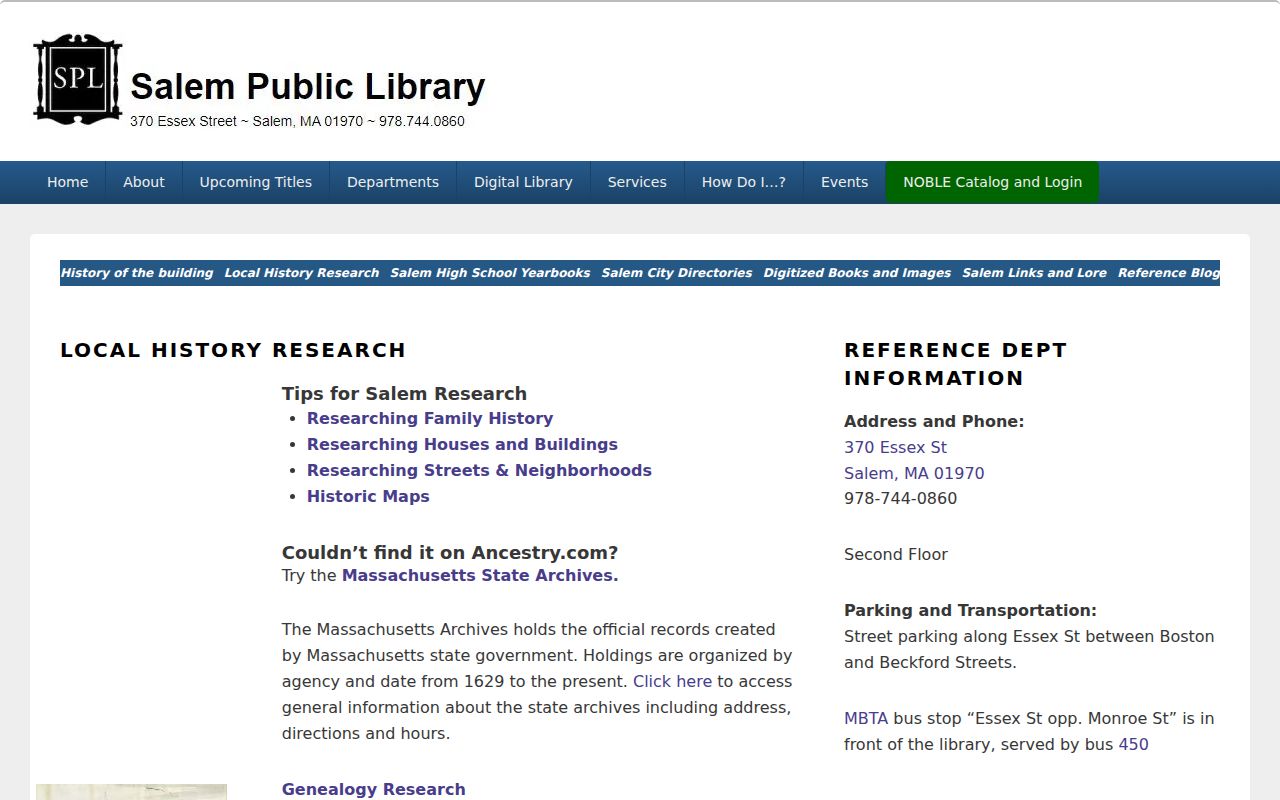
A saved citation should keep two things side by side. Record the directory page and the repository that supplied the source image.
Reading Essex County City Directory Listings
Copy a historical listing word for word. Resist the urge to expand abbreviations. Salem name listings can carry a surname or business name, an address, and an occupation or business description where printed. The street section sorts names by house number. Terms like boarder, roomer, widow, proprietor, or agent describe a printed relationship in that edition, not a permanent identity claim.
| Printed name | Record initials, spelling, suffixes, and any qualifier exactly as shown. |
|---|---|
| Address or street number | Identify the printed location and distinguish it from a later parcel address. |
| Occupation or description | Use it as historical context and a way to separate similar names. |
| Household term | Words such as widow, boarder, roomer, proprietor, or agent carry the directory's own meaning. |
| Neighboring entries | Street order can provide nearby printed names, but it does not establish a legal boundary. |
- Criss-cross directory
- An address-first section that arranges entries by street or house number rather than surname.
- Householder index
- A directory section intended to identify the listed household name at an address.
- Abbreviation key
- The volume's printed explanation of shortened labels; photograph or transcribe it before interpreting a mark.
Essex County Directory Context Pages
The information pages inside a Salem directory go well past names and streets. Editions vary. But many carry city officers and their salaries, public-school details, and churches with their clergy. Others list institutions, societies, cemeteries, courts, vote counts, population figures, and fire-alarm boxes. That civic detail can date the setting around an address or an institution. It should never become a claim about people alive today.
Local color shows up too. The 1915 edition prints a Neighborhood Nicknames feature, which is charming and occasionally useful. A nickname is still not a legal boundary. It is not a Registry district, parcel line, ZIP geography, or census boundary either. Pair it with the printed street and municipality before trusting it. For an older map or a full house chronology, the Historic Salem house-history database opens the way. Its source binders hold deeds, atlases, Sanborn maps, plans, and directory references.
The Salem Historical Society resources page documents the local repositories. It also maps house-history routes that can stand beside any directory citation.
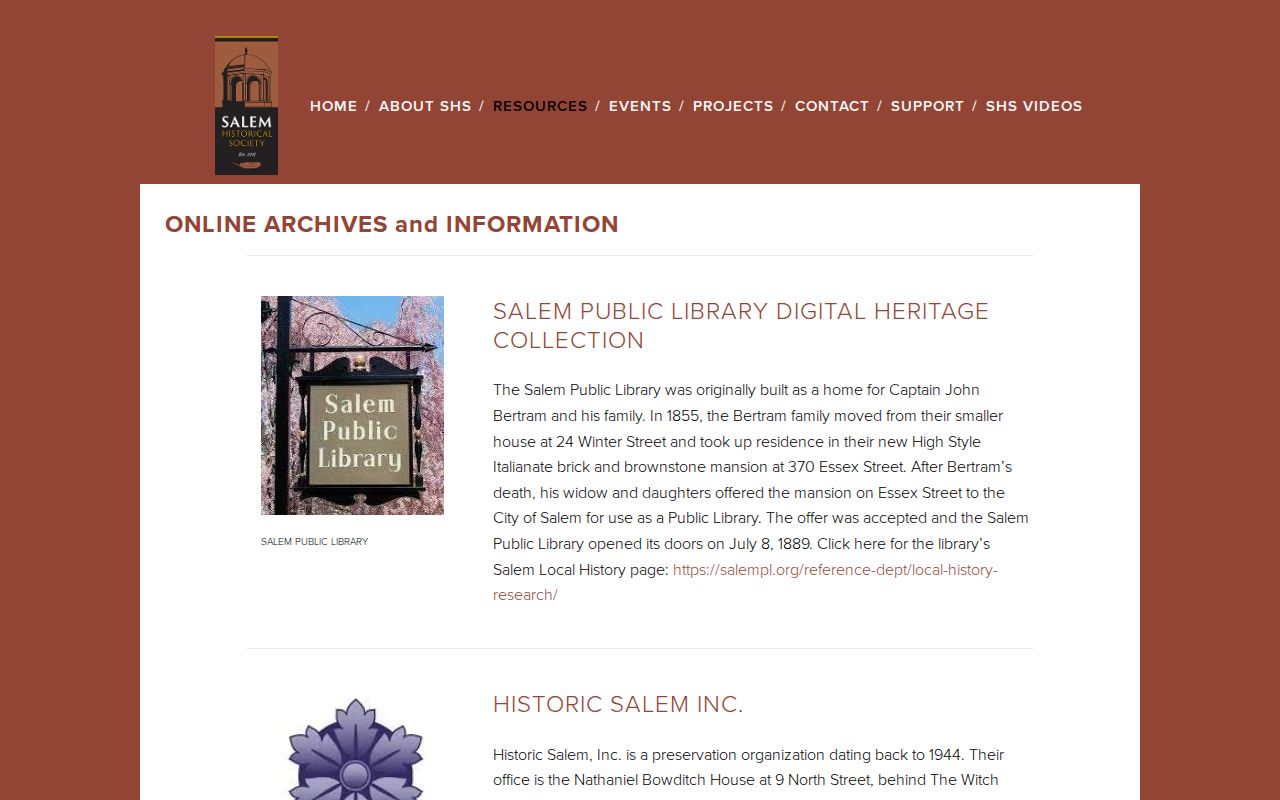
Used together, these companions help date a neighborhood or a property. The directory scan itself remains the evidence for what was printed.
Essex County City Directory Evidence
A printed directory is not a current roster. It proves no ownership, daily occupancy, death, or move. One surname may cover several different people. One address may serve as a residence, a business location, an office, or a mailing point. Read narrowly instead. This edition printed this spelling, this description, and this location on that date.
Before drawing any conclusion, check a nearby edition. Then inspect a direct record that answers the actual question. A Registry instrument settles title, and an assessor record fixes an assessment label. A census image dates a household, and a city-created archive document can confirm a civic fact. Modern address and land-record work runs through the Essex County by-street directory, which follows an address-keyed trail rather than a name-keyed one.
Note: Keep the directory date separate from the date of any deed, census image, assessor record, or archival copy.
Tracing Essex County City Directories
Family research starts at the first edition where the surname and municipality both seem plausible. Write down the printed name, address, occupation or description, section, and page. Then work outward in both directions through the available editions. The method holds up best when every match carries its own date and when similarly named people stay separate until another record links them.
- Find the person in a name listing or start in the Street & Householders' section when an address is known.
- Copy the spelling, printed role, street, number, edition year, and scan page exactly.
- Check one earlier and one later available edition for a move, new spelling, or a missing section.
- Use the same edition's street order for nearby entries, keeping those names as neighborhood context only.
- Pair the dated directory trail with the relevant federal census image, deed, cemetery, newspaper, probate, or archive record.
The National Archives census portal offers public census access through 1950 under the 72-year rule. Census years are fixed snapshots, while directories fill many of the gaps between them. Even a household found in both still needs a date, place, and source citation for each record.
Essex County Directory Town Coverage
Different Essex communities sit on different shelves. Salem and North Shore research tends to blend several source types. Library, municipal archive, historical-society, maritime, and preservation materials all come into play. Lawrence, Haverhill, and Methuen research may run instead through other channels. Industrial, Sanborn, census, church, municipal, or city-directory material serves those cities. Smaller towns often need a clerk, cemetery, church, probate, Registry, or historical-society route.
The National Archives 1930 city-directory holdings guide identifies selected local runs. Methuen years from 1921 through 1932 appear. Newburyport years run from 1922 through 1936. North Andover years span 1905 through 1935. Ask the holding institution for the precise edition, since the guide promises no digital copy.
The Salem directory collection page shows the named sections. Those sections make the collection useful for both surname and address research.
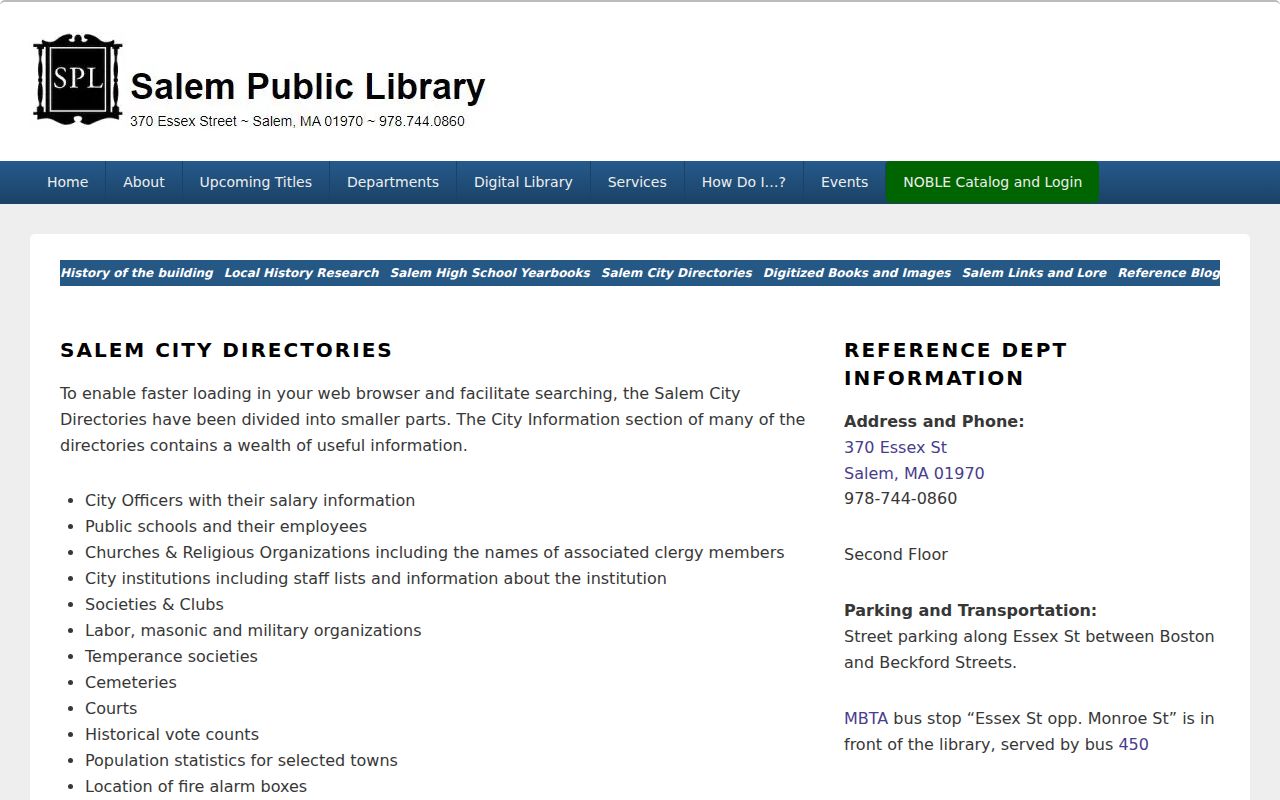
Save the edition, section, and scanned page with every finding. City-directory coverage shifts from one local volume to the next.