
Sources for Past Essex Residents
Previous residents leave a trail in sources that describe different events. A Registry instrument records a land transaction. A directory can place a printed name at a street number. A census is a dated household snapshot. A house-history file may point to deeds, maps, and directory pages, but it remains an index to inspect rather than final proof. Start with the period you need and compare sources that are close in date.
| Source | Era available | Essex access route | What it can show |
|---|---|---|---|
| Southern Essex Registry | Images 1640 to present; electronic index 1951 to present | Southern Essex portal, Beverly office, Salem satellite, terminals | Recorded instruments, plans, parties, book and page references |
| Northern Essex Registry | Images 1869 to present; indexes 1967 to present | Northern Essex portal, Lawrence office, terminals | Recorded instruments, plans, Land Court material |
| Salem city directories | Selected digitized editions, 1866 to 1946 | Salem Public Library collection | Name, street and householder listings where printed |
| Federal census | 1790 to 1950 public census | National Archives and research libraries | Dated household context, subject to image and index access |
| Historic Salem house histories | Property chronology varies by binder | Historic Salem collection | References to deeds, atlases, Sanborn maps, plans, and directories |
For a Salem address from the directory period, compare the street and householder listing with a deed and the nearest census. For an address in Andover, Lawrence, Methuen, or North Andover, start land work in Northern Essex. The remaining municipalities belong to Southern Essex. The municipality, not the ZIP, chooses the Registry district.
Essex County Address Record Hypotheses
“Who lived here before” is a question to test, not a fact supplied by a single record. An assessed owner may receive tax mail elsewhere. A grantee may be a trust, estate, corporation, or purchaser. A directory entry may identify a householder, boarder, roomer, shop operator, or subscriber. Write the role next to each name so that previous residents are not confused with owners, mail recipients, or people who merely appeared in a property-related record.
Historical address work also needs the address as printed in the source. A missing entry can reflect an editorial gap, a spelling change, a temporary absence, a different number, or the limits of a directory edition. The Salem collection specifically flags missing Beverly pages 497 through 546 in the 1899-1900 run. Mark a gap and search a prior or later edition instead of treating silence as proof that no household was present.
Note: Preserve the source date, street wording, municipality, and person’s printed role before joining any two address records.
Trace Essex County Deed Records
The deed chain moves backward through title, not automatically through occupants. Use a local assessor or the Massachusetts Interactive Property Map to normalize the parcel location and fiscal year. The statewide map provides address and place search, parcel popups, map-table tools, and Find Abutters, but its boundaries are representations. The Registry image and, for a boundary dispute, a surveyor control the legal question.
- Record the property municipality, current street address, parcel ID, fiscal year, and the assessor’s owner label. Keep the situs and owner mailing address separate.
- Select the Registry district from the municipality, then locate the latest instrument that names the current owner or entity as grantee.
- Read the image for the recording date, execution date when present, grantor, grantee, legal description, book and page or instrument number, plan reference, and prior-deed reference.
- Search the seller from that instrument as a grantee to find the seller’s earlier acquisition, then compare the legal description and plan reference.
- Repeat each transfer backward. When an online index ends, use the Registry’s older index-book images, public terminals, copy services, or staff assistance rather than guessing from a name match.
- Grantor and grantee
- The grantor transfers an interest; the grantee receives it. Either may be an entity rather than an occupant.
- Chain of title
- The sequence of recorded transfers connected by instruments and prior references for the same property interest.
- Legal description
- The property description in an instrument or plan. It can remain more stable than a street address in older research.
- Book and page
- A Registry citation used to locate a recorded instrument and connect it with related land-record work.
Essex County Registry Record History
Southern Essex serves every Essex municipality except Andover, Lawrence, Methuen, and North Andover. Its public portal reports recorded-land images from 1640, electronic indexes from 1951, and older index-book images reaching 1640 through 1979. Street-search data begins May 31, 1899 and is limited to deeds and conveyances. For the older period, an index-book image is a browsing route, not a modern exact-name search.
Northern Essex serves the four named municipalities and reports images from 1869 to the present and indexes from 1967 to the present. It also describes public terminals, copy orders, notary service, and bilingual service. Its Land Court name index is incomplete. Each route matters when a name or prior-deed reference does not appear in the web index. Southern Essex also reported a new search module on April 15, 2026 while keeping classic search under Searches, so capture the search date with the result.
Essex County House History Records
Historic Salem's House History collection is a local starting point for a Salem property chronology. Historic Salem, Inc. describes 33 house-history binders begun in 1966. The binders contain scans or references to deeds, atlases, Sanborn maps, property plans, and directories. Their value is the citation trail: use a cited book and page, map sheet, or directory edition to find the original record.
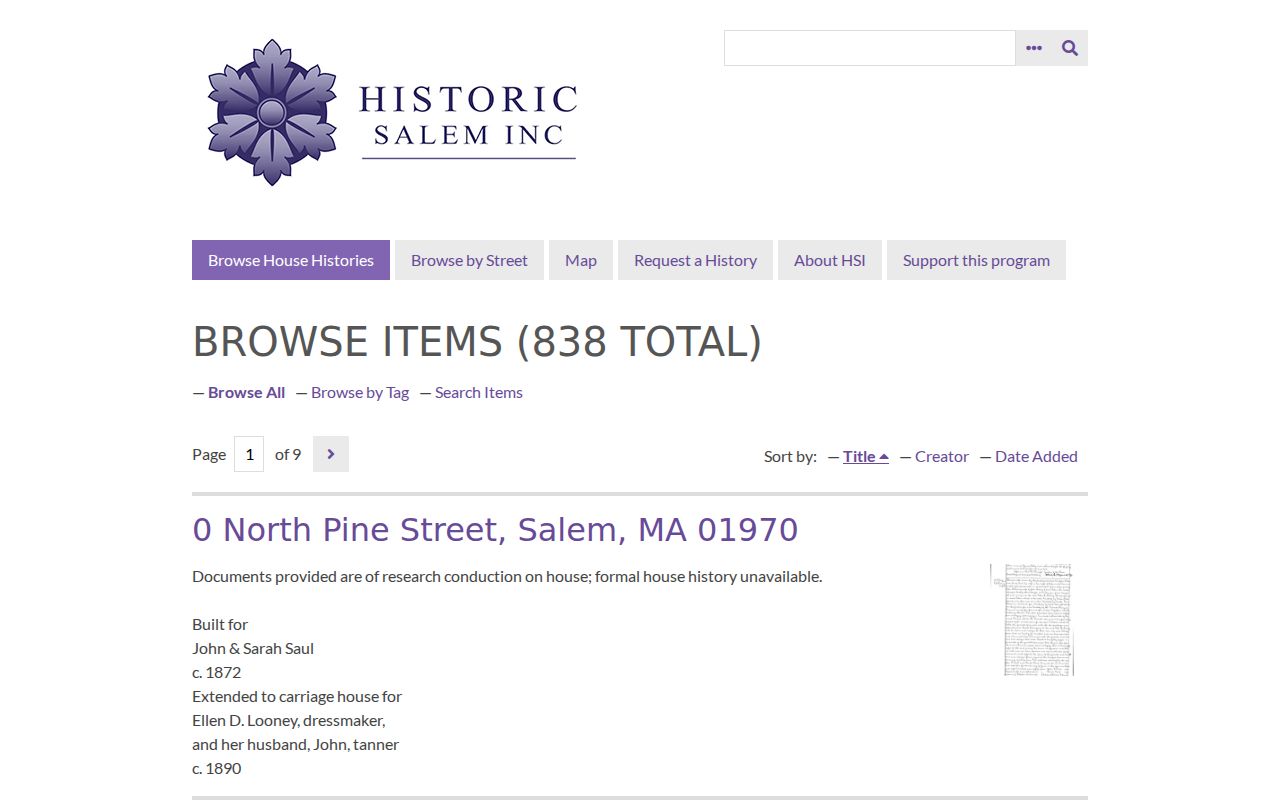
The collection helps connect a property’s local history without changing the proof standard. Read the Registry instrument for title, the directory page for a listing, and the map or plan for its own date-specific purpose.
For towns outside Salem, comparable local history may sit with a municipal clerk, historical society, library, church, cemetery, or probate collection. Do not assume the Salem binder coverage is countywide.
Pair Essex County Census Records
Directories and census images answer the household part of an address trail. The Salem directory collection has selected runs from 1866 through 1946, including a Street & Householders' Directory and, in 1931, a complete street and avenue guide. The federal census route covers 1790 through 1950, with 1950 the latest public census under the 72-year rule. Neither source is continuous, so compare the nearest dates rather than forcing a gap to tell a story.
A practical flow is: printed street listing, then name listing for spelling and occupation, then the closest census image, then a prior or later directory edition. The name listing can supply a different address or a household qualifier. Keep historical terms such as boarder, widow, proprietor, or agent exactly as printed. The digitized directory collections themselves are described on the Essex County city directories page.
| Comparison point | What to preserve |
|---|---|
| Directory edition | Year, section, scan page, street, number, printed name, role, and neighboring entries. |
| Census snapshot | Census year, image or index citation, address context, and household relationship as recorded. |
| Difference between sources | Mark it as a dated difference, not proof of a move, death, or relationship. |
Essex County Sanborn Record Context
Sanborn fire-insurance maps add built-environment context to an old address. The Library of Congress Salem March 1890 set has 43 sheets and two skeleton maps. Other documented Essex-area examples include Lawrence 1895 with 80 sheets and Methuen coverage, plus Newburyport sets from 1888 and 1894. Compare the sheet year and nearby intersections with a parcel or Registry plan before drawing conclusions about a building footprint.
Sanborn maps show structures, use labels, materials, and fire-insurance context. They do not prove ownership or occupancy. A map can help orient a directory street number or historic plan, then the dated directory, census, or deed supplies the separate claim about a household or title.
Previous Essex County Residents Need Dates
Salem City Archives, under the City Clerk, offers another municipal route for city-created records. The archive says its records date from 1634, originals are reproduced, and copies may be requested for a fee. That long municipal history is separate from the Southern Essex Registry’s land-record history beginning in 1640. One address can therefore have a city-record trail and a title trail that must be cited independently.
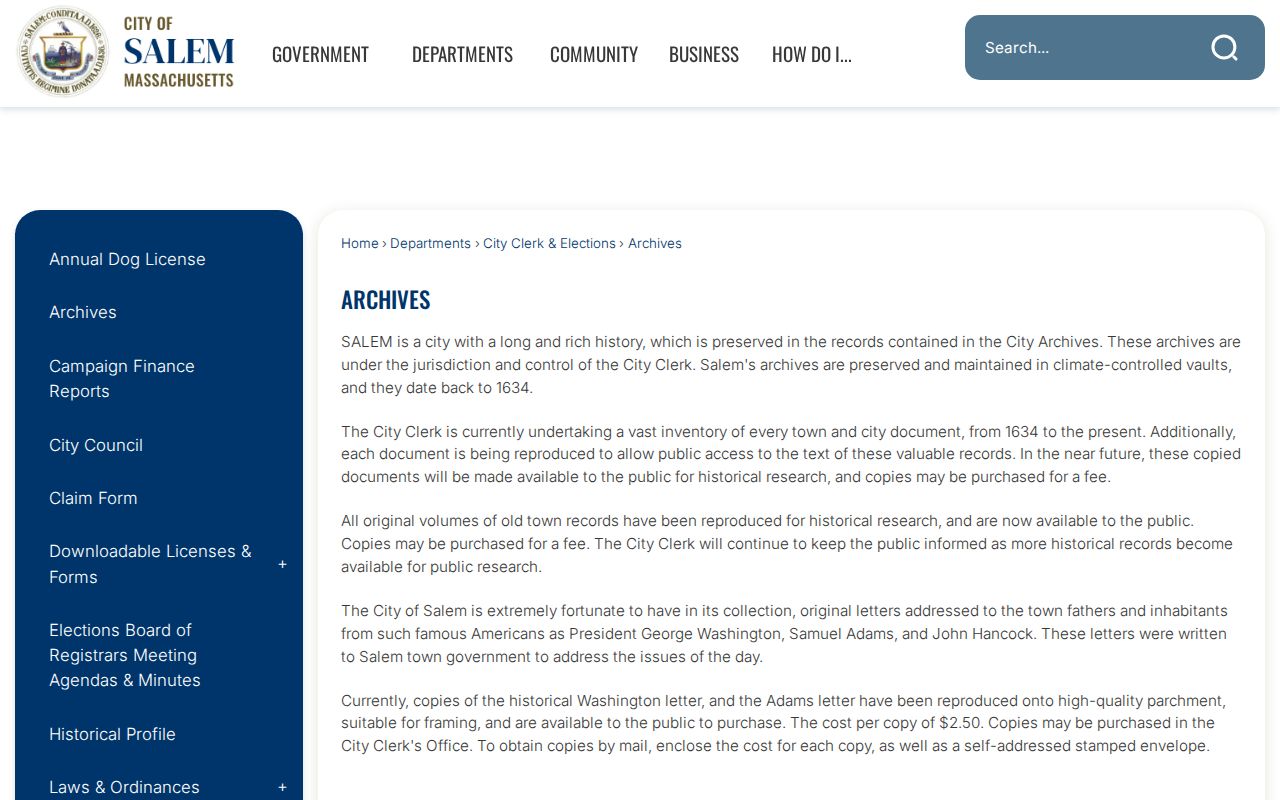
When an online source ends, request a copy or ask the custodian what existing index, register, microfilm, or image route is available. Under the Massachusetts Public Records Law, M.G.L. c. 66, § 10, a written request goes to the custodian or Records Access Officer and should name the existing record, date range, and preferred format.
Note: A precise request for a cited book, page, parcel, street, and date is more useful than an open-ended request for a person’s history.
Past Essex County Household Records
Past residents become more credible when the address, source date, and role line up across independent records. A deed chain can show title transfers. A Street & Householders' listing or census can show a historical household at an address. Probate, obituary, cemetery, and archive material can provide a dated endpoint when it directly identifies the person and source. Keep unresolved candidates unresolved.
Use an address trail for family history, property history, estate questions, and local research. Massachusetts confidentiality protections still matter. The Address Confidentiality Program and confidential voter rules protect eligible people, and sealed, juvenile, victim, medical, and safety-sensitive records are not gaps to work around.